Tuesday, 17 February 2009

K5D - Desecheo Island Expedition - Worked!


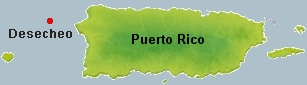
Desecheo Island off the coast of Puerto Rico was activated and will be on the air from February 12 - 26, 2009. The ops at K5D are covering most of the HF bands for the duration. Check your DX cluster of choice to discover their operating band and mode. They also have a very detailed website and also an online logbook that's updated at least twice a day. I've just worked them this afternoon on 17m SSB and they have an excellent signal to the Ottawa area. They've been on most days and I had a few spare minutes so I decided to work them. The ops work split and announce the listening frequency on the cluster and occasionally while transmitting. Still, you hear many ops trying to work the expedition on their transmit frequency.


I've been using the FT-950 and my re-furbished Cushcraft R6000 vertical. It's a nice combo and K5D came back on my second call. I'm running 100 watts and a wee bit of processing (20%) - seems to be working well. His signal was S5 - S9 and the ops are very very good in working all the stations. Not rapid fire fast, but a nice easy pace.


The FT-950 is very easy to set up on split and with the latest "PEP950" updates the receiver is very quiet - signals jump out. The "PEP950" updates include processor and dsp fixes and new features added to an already great transceiver.


K5D is the 6th most-needed DXCC entity world-wide, the 3rd most-needed DXCC entity in Europe and the 2nd most-needed DXCC entity in Asia.

What I'm Reading - "The Invisible War"


This isn't a ham radio entry today. While away on Barbados I took a couple of books with me to fill in time on the beach. The Invisible War by Gil Murray is a fascinating read on a little known top secret group of Royal Canadian Signal Corps operating in Australia, from 1944 to 1946. The group intercepted and deciphered Japanese military signal. Number One Canadian Special Wireless Group (1CSWG) was part of the Allied Special Wireless units that provided vital advance information about Japanese battle plans.

Gil Murray says, " Long after the war's end, the very existence of 1CSWG and its part in the Pacific victory has remained unknown to Canadians. Canada's contribution to the top-secret Allied operations known in the Pacific as "Magic" and in Europe as "Ultra" could not be told under the Official Secrets Act." Canada and other Allied countries had been monitoring Japanese military signals since before the outbreak of war in the Pacific in 1941.

The book details the lives of the 336 operators, their equipment and skills and their survival in the bleak hostile terrain of Australia during the Pacific war.

Highly recommended.

"The Invisible War" ISBN 1-55002-371-3

Wednesday, 4 February 2009

8P9VE Barbados Expedition


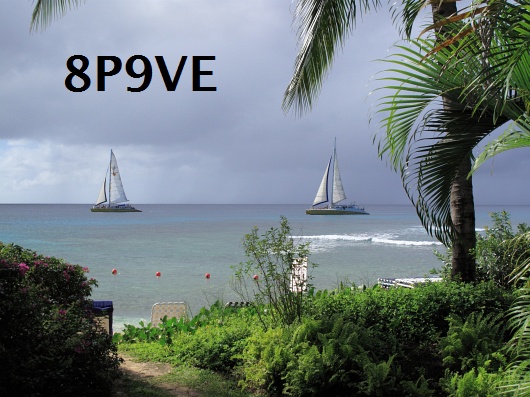
Ahhhhhh, warm, sunny, clear blue waters outside the door of a rented villa. Monday January 26th saw me leaving Ottawa (-29C) for a short holiday in beautiful friendly Barbados (28C). Ron, 8P6JB did all the paperwork and running around getting my license to operate in Barbados. I settled on the call 8P9VE as this represented a little of Canada in it.

The villa was at Reeds House on the north west shore of Barbados. The back entrance and patio of the villa descended to a white sand beach and palm trees. Very much a heaven compared to icy frozen Canada. I traveled with my VX-170 and VX-3R handhelds and a small external window mounted antenna. I just happened to be in the shadow of the island repeaters so I couldn't qso with anyone from the villa unless I was in the rented van and up at a high point away from shore.

The Barbados Amateur Radio Society meets at their club station every Friday night for a social get together, and Ron 8P6JB invited me to attend. The club station is located at one of the highest points of land on the island just outside Bridgetown. It sits on a former sugar plantation and you can see the remnants of the old wind mill that powered the plantation machinery.


The Friday meetings are very informal and softdrinks and beer are available to all - which probably makes these meeting very popular. I got to operate the club station which is equipped with very modern up to date gear.

Peter, 8P9NX, a retired M.D. from the Mayo clinic in Minnesota was operating the station when I arrived. He quickly set up the club laptop for psk and I made a few stateside contacts on 40m psk that evening.

Peter's obsession is golf and ham radio since he retired to the island a few years ago. He plans to sail his 37 foot sailboat with his son, from the U.S. to Barbados later this year. Peter works about 50 stations a day on his K3 and CW - he does a bit of psk too.

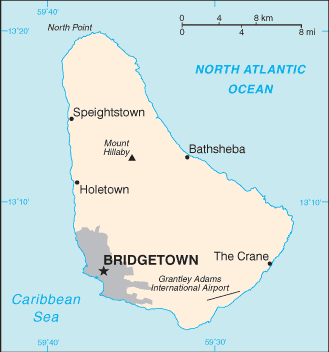
Barbados currently has about 150 licensed ham radio operators. Barbados' population is 281,968 (July 2008 Est.). Peter was telling me that at these latitudes 80 meters and 160 meters are great in the evenings with very low noise levels. Getting a license to operate in Barbados cost $15USD and you have to send a copy of your Canadian license and a list of all the equipment you'll be bringing to the island. The license is good for one year and I plan to go back in a few months with my own equipment and a couple of my PAR EndFed antennas packed away in my suitcase. Using the 8P9 call created quite a stir on 40 meters but qrm was high due to the number of stations.


The club station also has emergency backup power via batteries and generators in case of natural or man made disasters. The stations included a Yaesu FT-1000 MkV, an FT-450, 2 meter handhelds and base radios along with older Kenwood and Icom radios - so a very well designed and equipped ham station. Antennas include wire dipoles, various beams and verticals.

I would like to thank again Ron Wilkinson 8P6JB for all of the legwork and keeping in contact with me while on Barbados and the great Friday evening club meeting of January 30, 2009. And a big thanks to Peter 8P9NX for showing me the ropes at the club station.

Geography
Area: 431 sq. km. (166 sq. mi.); 2.5 times the size of Washington, DC.
Cities: Capital--Bridgetown.
Terrain: Generally flat, hilly in the interior.
Climate: Tropical.


Friday, 23 January 2009

International Space Station Ham Radio Repeater

This is from SolarCycle24's web site run by Kevin VE3EN.

Here's what Kevin has to say:
This weekend I will again be broadcasting LIVE the 2m downlink of the International Spacestation Ham Radio repeater. This is a fun way that Ham Radio ops make contacts on the VHF airwaves.

When the ISS is within our footprint, Amateur Radio operators transmit on the 70cm amateur radio band freq. 437.800 where the antenna and repeater system onboard the ISS will relay the signals back to earth and the downlink is received on 2m freq. 145.800.

Below is a link to an earlier ISS pass video.

http://www.youtube.com/watch?v=S-0zGnaFHK4


(image courtesy NASA)

Wednesday, 24 December 2008

A Season's Greeting To All Good Readers

I would like to thank all readers of my blog for making it a success. A season of giving and renewal is upon us and I hope that each and every one of you finds the time and energy to help those less fortunate. If you know someone who’s spending time alone during this holiday season call them or have them in for a meal or invite them out for a coffee and donut.

I also hope that you all find some amateur related goodies under your trees in the morning.

See you all on the air, Christmas Day, for a few hours.

Imagine all the people living life in peace. You may say I'm a dreamer, but I'm not the only one. I hope someday you'll join us, and the world will live as one.
- John Lennon

Saturday, 20 December 2008

3B8GT, Mauritius

Ham radio has been slow here at VE3MPG. I do get on most mornings just to listen around and I work PSK 99.99% of the time. It’s just a lot easier than trying to decipher SSB sigs with my less than perfect ear.

mauritius_map1 I was on this morning just before lunch and heard VE3JW, the amateur station over at the Museum of Science and Technology about 24 Kms to the north of me. Darin, VE3OIJ was just signing with a station, 3B8GT. Had to look that one up; and quickly, after Darin’s final, I got a call in to that DX station. He responded with a 599 and he was strong here too with some QSB. 3B8GT is the island of Mauritius about 900 kilometres to the east of Madagascar and east of Reunion Island in the Indian Ocean. A good catch indeed with all of 20 watts reaching my Cushcraft R6000 vertical. I’m not really sure how much signal reaches the antenna as I’m feeding it with 100 feet of RG59 el cheapo coax. That’s 75 ohm coax, but my FT-950 swr meter tells me there’s no reflected power. Let’s say that less than 20 watts gets radiated. The Museum uses a beam but I was hearing the Mauritius station Q5 here.3b8gt

The op on Mauritius is Alexey 3B8GT with a very modest station according to his QRZ.com listing – 50 watts to a 3 element yagi. Conditions seemed to be perfect this morning but looking at the solar terrestrial data indicated the solar flux at 69, A-index at 2 and the K-index at 0. Not so good propagation it says. Nevertheless the actual working conditions seemed excellent at the time. Local temperature was –17C, crisp and sunny. When I signed with Alexey I hung around a bit to see who might work him but he called CQ for a good ten minutes and no takers. My strategy is to look for weak traces on the waterfall and try to work those stations – usually they turn out to be some good DX. Last spring I worked Reunion Island late in the evening on 20 meters using this strategy – it took me a week to snag him due to pile ups he was generating. That contact was using a 20 meter hamstick and 20 watts.

Another PSK31 tip:
Use the center of your waterfall. Testing will show that your transmit (TX) and receive (RX) will be strongest there. Don’t blindly use 1000Hz tone or strictly follow the VFO ‘set it and forget it' concept. You can easily lose 20% or more of your power on each edge of your pass band. Pass band centering of the signal will give the best results of both RX and TX.

CIA World Fact Book on Mauritius

Sunday, 7 December 2008

A Good Cold Snap


Winter has arrived in the Capital, Ottawa. Power is out this afternoon to about 17,000 people on the outskirts of greater Ottawa. There's been some terrible winds in excess of 50Km/hr and gusting higher out here near Metcalfe about 19 miles south of Parliament Hill. Temperatures have been dropping all day and stand at -12C at 3pm. Expected low temperatures overnight will hover around the -20C mark and that's not including the wind chill. Affected areas include: Orléans, Alexandria, Alfred, Clarence, Cumberland, Hawkesbury, North and South Plantagenet, Osgoode, Rockland, Russell, South Gower, and Winchester.

I've been listening to the Emergency Measures group repeater VA3MV, 146.985- (100.0Hz tone) but there's not much going on. Power in FN25fe has been on all day with no hiccups so far and the band conditions have been very very good on 20 meters. Last night 40 meters was extremely quiet; so quiet that I kicked in the preamp on the FT-950 so I could hear band noise. Signals really jumped out of the noise floor with very deep qsb on all the sigs.

My R6000 is surviving the windy onslaught largely due to the guying I installed when it went up a few weeks ago. I can see a very slight side to side movement of a couple of inches which isn't too bad. The PAR end fed dipoles of course are rugged enough for even Arctic use, which today's weather approximates very well.