Monday, 22 March 2010

Beginnings – SWL 1967-1969

bob_swl_c1968_sm

This was the beginning of my love affair with all things radio. It was the late 60s. Martin Luther King had been assassinated, Detroit was burning with race riots, and I had seen “Hair” on stage at the Royal Alex in Toronto. We could see the smoke billowing from the great Motor City during the riots. Every Sunday Detroit tested the air raid sirens and they could be heard well across the river – a long wailing lament, as if they could save us from nuclear vaporization.

My father got me an 8 band shortwave radio at the local K-Mart. Early mornings I would listen to Radio Australia with their sign on tune of “Waltzing Matilda”. I listened to Red China and even wrote to Radio Peking for a QSL. MaosLittleRedBook_smThey sent a huge package, Mao’s Little Red Book and a poster of Mao Tse-tung – it was plastered inside my high school locker for a spell. Don’t know what happened to the Red Book. Dad always said that the RCMP had me on a watch list after receiving that package. I had neat QSL cards from WWV, Radio Cairo, Radio Japan, a station from Bonaire in the Dutch Antilles.

I learned much about geography and a little about electronics. I built a outboard BFO so I could zero beat cw stations and learn the morse code, but I never did. The BFO worked just fine – it was from an article in Popular Electronics and I etched my circuit board and found all of the parts over in Detroit at the old Lafayette electronics store. In those days we took a bus over through the Windsor-Detroit tunnel under the St. Clair River. One only had to show a birth certificate in those days. It was a good walk to the Lafayette store and then back home with my treasures.

The main antenna was an old single bed spring suspended at ceiling level – it worked great but I suspect it was the height of the sunspot cycle.

It wasn’t until 1980 that I got my ham license; now I’m 30 years in.

Wednesday, 17 March 2010

Some Upgrades, Some DX

The weather’s been beautiful in the National Capital Area. We’ve broken some temperature records, not just in the last few days but for most of the month of March. The winter was mild too. There have been robins in south Greely since Christmas week. They stayed all winter this year. Temperatures were 16C yesterday and reached a high of 15C today. With the warm weather comes antenna maintenance and improvements. I spent yesterday running 130 feet of new coax to my Cushcraft R6000 vertical. It was long overdue and I kept putting it off in typical ‘ham’ fashion. I did spend most of the winter on 40 meters because conditions were very good and my PAR EF-40 End Fed dipole performed very well.

After terminating the coax with connectors and checking my work I got it all connected and working. 20 meters was full of signals about mid afternoon and I snagged a DXpedition – TM7CC – Ouessant Island IOTA EU-065. tm7cc_teamOuessant Island is the western most part France’s territory out in the Atlantic. They had a potent signal into Greely on RTTY and I snagged them on the second call. Signals on 20 were strong until well after dusk.

Today, signals were pounding in on 17 meters. Around supper time the JAs dominated the band with RTTY. It’s great to see the bands coming alive again and staying open late. It’s been a long time since I’ve heard that much DX on the upper bands. There are some exciting times ahead for us hams – all over the world.

Monday, 15 March 2010

What I’m Reading

Russian literature was never my forte. Sure, I read The Brothers Karamazov by Fyodor Dostoyevsky in high school, slogged through it actually – a novel about morality and of God.

Fall of a Titan Title page2_small Many years ago I began collecting books; nothing very rare but most interesting. At a yard sale in Ottawa East I discovered a neat book and paid ten cents for the hardcover novel. It was signed and even had a rough sketch of a woman inside the front cover. At that time I didn’t recognize the author – Igor Gouzenko. I’m finally getting around to reading “The Fall of a Titan.” Gouzenko, in his book, explains the facts of Soviet life: “The Government keeps you, pays you, looks after you without end. Now you're going to pay some of it back.” Gouzenko defected September 5th, 1945.

Gouzenko was a cipher clerk at the Russian Embassy in Ottawa. He defected, actually walked out of his job and produced 109 startling documents which laid bare the Russian atomic espionage network in North America and paved the way to the conviction of British Physicists Klaus Fuchs and Allan Nunn May, the Rosenbergs and half a dozen others who stole allied atomic secrets for the Kremlin. Gouzenko_apt_Somerset Gouzenko asserted that the USSR maintained an extensive spy ring in Canada, aimed mostly at obtaining atomic secrets.  Furthermore, Gouzenko warned, the Soviets were not allies but were planning world domination. Gouzenko’s revelations shattered the innocence of the naïve Canadian populace. His defection initiated the Cold War between the Soviets and the West and led to the creation of NATO and the Warsaw Pact.

Gouzenko_1948_CampX

Among those implicated by Gouzenko’s documents was Egerton Herbert Norman, an External Affairs official hotly pursued by US Red-hunters, and Lester Pearson, then secretary of state for external affairs, who ardently protected Norman. Gouzenko maintained that Pearson had Communist leanings, an allegation supported by Elizabeth Bentley, a Soviet double agent who later withdrew her testimony. Documentation regarding her testimony has since disappeared. Historians argue about the state of Pearson’s loyalty. While some regard Gouzenko as a hero to the West, others accuse him of being a mercenary or a traitor. Gouzenko’s reply would be that he “had a duty to the millions enslaved and voiceless in Russia.” At the very least, he was an opportunist who made a better life for himself and his family, though he did not enjoy the freedom we take for granted. He lived the rest of his life in Mississauga under police protection. He died in 1982.

Gouzenko_autograph_ve3mpg

Gouzenko’s sketch and signature in my copy of “The Fall Of A Titan.” The Gouzenkos were accomplished writers and artists.

Sunday, 14 March 2010

Windows 7 At VE3MPG

win7VE3MPG I’ve been using Windows 7 RC1 since the beginning of June last year. I installed it on my AMD64 3200+ Asus motherboard system with 2 gigs of ram. It was a fairly painless install at that point. I had 3 hard drives in the system and used the smallest as my Windows 7 test drive; completely wiping out the old XP Pro install and doing a fresh Windows 7 Ultimate 64 bit install. It was probably one of the easiest OS installs I’ve ever done. The RC (release candidate) detected all of the old hardware except the on board Asus wireless card. I installed a Trendnet wireless network card and all was well and working. All of my software worked just fine as well as some external hardware like a flat bed scanner, several USB external hard drives as well as several thumb drives.
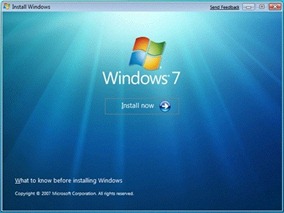
windows-7-install1 This past week was install week at VE3MPG for 2 machines: my ham computer described above and my work machine – a AMD quad core system with 4 gigs of ram, 2 hard drives – a 500 gig OS drive and a 1 terabyte data drive, fast video, and wireless network card. This last system was newly built a few months ago and tested with the release candidate Windows 7 Ultimate 64 bit. With the official release version of Windows 7 many more drivers were made available and my ham shack system installed in less than half an hour; this time the on board wireless drivers installed. I purchased the 3 pack Home Premium version of Windows 7 as I find this is probably the best bang for the buck of the available versions of Win7. One can install either the 32 bit or 64 bit version to a maximum of 3 systems. If you’re not on a corporate network this version works just fine for home based networks.

I find that Windows 7 is snappier and just works faster than XP did on my ham station computer. All of my ham software works great – Ham Radio Deluxe, VE7CC’s DX cluster program and just about anything I’ve downloaded to do with amateur radio. All of my older legacy programs work fine as does my Keyspan (USA-19H) USB to serial port adapter. It all works just great. Boot up times seem to be about the same or slightly faster.

I really enjoy the desktop gadgets – some ham radio related that I’ll write about in another post. On my work system, the quad core machine, I installed Sun Microsystems’ VirtualBox and installed Windows XP Pro as a guest operating system, in case I do run into some non-functioning or XP only software. With VirtualBox you can run multiple operating systems on the desktop. XP in VirtualBox makes use of hardware, networking components and USB ports. VirtualBox supports Windows 7, Vista, XP, 2000, NT, Server 2003 + 2008, Windows XP, Ubuntu and many other Linux flavours. See the VirtualBox website for more information. VirtualBox hosts include Windows, Mac OS X, Linux and Solaris.

Microsoft provides a tool called Windows 7 Upgrade Advisor. You download, install and run it on your system – it will advise you if it’s realistic to run Windows 7 on your hardware and determine which hardware has new drivers or drivers not yet available. Microsoft updates the Upgrade Advisor regularly as new drivers are released by the manufacturers.

My ham station computer is going on 6 years old now but it’s running all of my software just fine on Windows 7. I’ll report later on other ham software compatibilities.

Sunday, 7 March 2010

Smallest Morse Key - Field Telephone Set D.MK.V

© VE3MPG-1940 Telephone set D.MK.V
This small key is part of a WWII Field Telephone Set D.MK.V. As you can see the set is in very fine condition and complete. It came up at a flea market many years ago and I dug it out of storage yesterday to have a good look at it. The original field telephone called the “Fullerphone” was developed during the First Great War by Captain A. C. Fuller.
From a document by Louis Meulstee, PA0PCR - 1915 . . . the British and German armies were densely packed in their trenches, at places only a matter of yards apart. Communication was mainly by telephone and various Morse buzzer telegraph instruments, connected by a single wire and earth return. During mid-1915 the Germans were extraordinarily well informed of Allied plans. Espionage was suspected but an interned British civilian brought back the information that induction from cables led to overhearing. Experiments carried out within the Allied lines left no doubt of the cause of the leakage.
fuller5 The solution to the overhearing problem came toward the end of 1915 from Captain (later Major General) A.C. Fuller, who invented the Fullerphone, a small direct-current Morse telegraph instrument. In October, Fuller brought two prototypes to 5 Corps in Flanders. His invention was tested on a five-mile loop of cable, part of which ran in the water-filled moat of Ypres with a 10-ohm leak to earth. The prototypes worked well. They were obviously the answer to the problem of overhearing by induction which had brought the British Expeditionary Force almost to a standstill in terms of signals.
© VE3MPG-1940 Telephone Set D.MK.V wide
Working principle of the Fullerphone
The Fullerphone is essentially a DC Morse telegraph instrument with high sensitivity. Morse signals can he sent and received by the same instrument, no send-receive switch being used, so "break-in" working is possible. When sending, a very small direct current flows through the line and the receiving instrument. A readable signal is produced with a current of only 0.5 microampere!

To make the DC Morse signals audible, Fuller added an interrupter for changing the steady current into an intermittent current, suitable to produce a tone in a pair of headphones. The result is that dots and dashes sent by the key at the far end are received as short and long notes at the receiving end. Fuller completed the circuit by inserting capacitors and LF chokes to keep the current in the line relatively constant.
Features of the Fullerphone
Fullerphone signals cannot be overheard by induction or earth leakage and can be tapped only by the direct connection of a similar instrument to the line. The Fullerphone can be used simultaneously with a telephone or buzzer telegraph on the line. Working via leaky or very long cables is possible. However, the normal range for reliable communication under field conditions is 25 to 35 miles. Much greater ranges are possible under special conditions (e.g. open-wire lines in the desert) or by putting in a minor circuit change.

During 1939 a newly designed Mk IV model went into service. It was more sensitive than its predecessors, with a more easily adjustable buzzer/interrupter, and simpler to use as it carried no telephone set. Small modifications, such as radio-interference suppression of the buzzer and insertion of a crash limiter across the phone jacks to limit line static, were carried out on the Mk IV model.
fuller05_tobruk Tobruk-1942... A row of Mk.IV Fullerphones in use at an Australian headquarters in the Western Desert
In 1943 a tropicalized version was issued. This Mk V model had a similar circuit but tropicalized components. The Mk VI Fullerphone, the last type built, was completely tropicalized and immersion-proof.
© VE3MPG-1929_sm
The D.MK.V was used by British, Canadian and United States forces during the war.
© VE3MPG-1931_sm
Cases arose where a submarine cable circuit was available but the necessary telegraph terminal equipment was found totally destroyed or was not immediately available. To ascertain to what extent Fullerphones could be used on submarine cables of various lengths, trials were carried out in 1943 by Cable & Wireless Ltd. at request of the British War Department. The results exceeded any expectation; ranges of up to 700 miles were obtained with faint but readable Morse signals at a maximum of 20 words per minute.
So there you have it – a very interesting story about an innovative piece of communications gear developed almost 100 years ago and used in two World Wars.
Links:
The Fullerphone
Additional Photos

Friday, 5 March 2010

Popular Science – Entire Archive Online

PopScienceMarch1932_sm

Popular Science magazine, has scanned its entire 137-year archive and put it online.

The archive is made available in partnership with Google Books. I did a few searches this morning – ham radio related searches (like the March 1932 edition above) and there’s some really great vintage articles in the archives. Definitely worth a look.

“We've partnered with Google to offer our entire 137-year archive for free browsing. Each issue appears just as it did at its original time of publication, complete with period advertisements. It's an amazing resource that beautifully encapsulates our ongoing fascination with the future, and science and technology's incredible potential to improve our lives. We hope you enjoy it as much as we do.”

It also works on the iPhone and iTouch.

Here’s the link:

Search the PopSci archives

Wednesday, 3 March 2010

Identifying An Old Key

© VE3MPG-1916_sm

I acquired this morse key about 25 years ago. A few years ago Bob VE3DUB (SK) made a nice oak base for it and put a knob on it. At that time he told me it was a very rare key. There are two marks on it – the initials GNW and 1795 – as seen below.

© VE3MPG-1912_sm© VE3MPG-1914_sm

© VE3MPG-1919_sm Not sure if any of my readers can identify it. I’ve spent a good deal of time on Google trying to datamine information about it.

Links:

Radio Telegraphy Net

J.H. Bunnell and Co. Telegraph Apparatus

Straight Key Century Club (SKCC)

Morsemad G0RDO

KT5X Morse Code Key Collection